


Products
- Circular Connectors & Cable Assemblies
- D-Sub Connectors
- IP67 D-Sub Connectors
- D-Sub Backshells
- Micro-D Connectors & Cable Assemblies
- Power-D & Combo Mixed Connectors
- Push Pull Connectors
- D-Sub & Micro D Hardware
- Modular RJ45 Connectors
- USB Connectors
- D-Sub Adapters & Gender Changers
- SCSI .085"/.050"
- .050 Ribbon
- Headers & Receptacles
- Bayonet Connectors
Robots-as-a-Service (RaaS) and the Connectivity Behind Scalable Automation
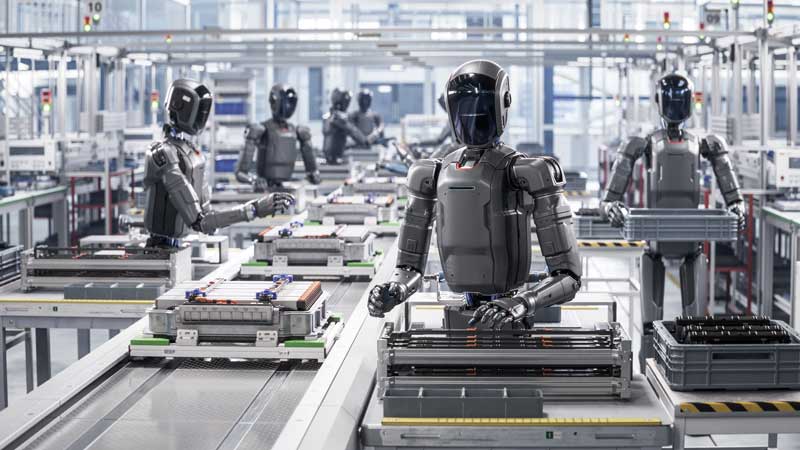
Robots are no longer just capital equipment. In many applications, they are becoming services.
Robots-as-a-Service (RaaS) is changing how companies deploy automation by shifting the model from large upfront investments to subscription-based or usage-based access. Instead of focusing only on acquisition cost, users are increasingly evaluating robotics in terms of uptime, flexibility, serviceability, and long-term performance.
That shift does not just affect purchasing decisions. It also changes how robotic systems need to be designed.
What Is Robots-as-a-Service?
RaaS is a business model that allows companies to access robotic systems through recurring service agreements rather than purchasing the equipment outright. This approach can help reduce upfront costs, simplify deployment, and make automation more accessible for operations that need flexibility.
For OEMs, integrators, and system designers, however, RaaS also introduces new expectations. Robots in service-based models often need to be easier to monitor, easier to maintain, and easier to update in the field. Designs that support modularity, fast replacement, and reliable long-term operation become even more important.
Why RaaS Changes the Engineering Conversation
Traditional robotic systems are often designed around installation and long-term use in a relatively fixed configuration. RaaS models push that thinking further. When uptime is part of the value being sold, maintainability becomes a much bigger part of the design equation.
That means engineers may need to think beyond initial performance and consider questions like:
- How quickly can a subsystem be replaced in the field?
- How will this robotic unit be modularized for easier shipment between customers?
- How well will interconnects hold up to repeated mating cycles?
- Can the system maintain reliable signal and power performance in demanding environments?
- Will the design support easier diagnostics, upgrades, and service access over time?
In RaaS systems, connectors are not just passive interfaces. They can directly influence reliability, modularity, serviceability, and downtime risk.
Where Connectors Matter in RaaS Systems
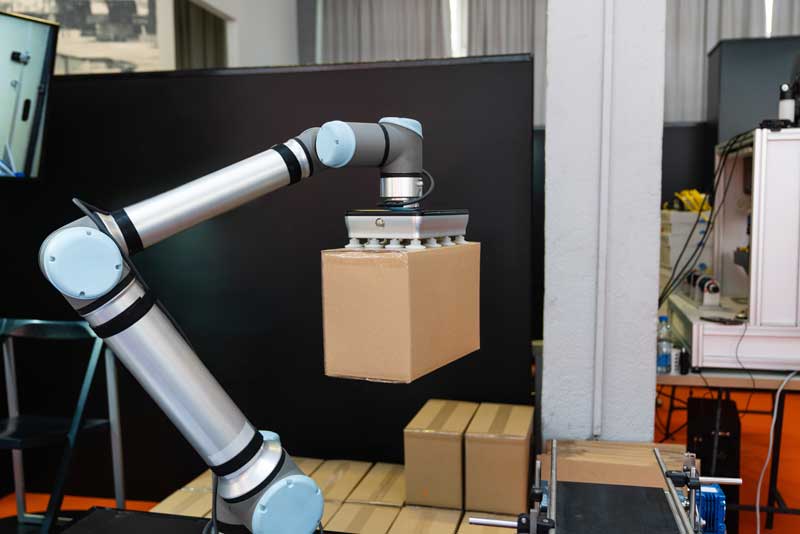
Robotic platforms rely on a wide range of connector interfaces across control systems, power distribution, I/O, sensing, and external access points. As designs become more modular and service-oriented, connector selection plays a larger role in overall system performance.
Control and Signal Interfaces
Robotic control systems often depend on compact, secure, and electrically reliable signal connections. In these areas, connector performance affects communication integrity, signal continuity, and resistance to vibration or accidental disconnects.
Solutions such as SEAL-D and MICRO-D connectors can support these requirements where secure mating, proven performance, and compact packaging are important.
Power and Mixed Power/Signal Applications
Many robotic subsystems require both signal and power in limited space. Combining these requirements efficiently can help reduce cable complexity and simplify integration, especially in designs that may need field replacement or modular subsystem changes.
POWER-D mixed-layout connector options can be valuable in these applications by helping engineers consolidate interfaces without sacrificing reliability.
External I/O and Harsh Environment Exposure
Robotic systems used in industrial automation, autonomous mobile platforms, or outdoor-adjacent environments may expose connectors to dust, moisture, washdown conditions, vibration, or physical handling. In those cases, environmental protection becomes a major design consideration.
Stainless Steel connector options and rugged circular interconnects can help support reliable performance in these more demanding operating conditions.
Service and Maintenance Access
One of the biggest differences in a RaaS environment is that serviceability becomes part of the value proposition. Connectors used in serviceable sections of the robot may need to support repeated connection cycles, easy access, and dependable remating in the field.
That makes accessories such as backshells, strain relief, and shielding hardware more than secondary components. They can play an important role in protecting terminations and helping maintain long-term system integrity.
In RaaS, Downtime Is the Real Cost
In a traditional ownership model, a connector issue may be viewed as a component failure. In a RaaS model, it can become a service disruption.
Intermittent signal loss, environmental ingress, poor strain relief, or wear from repeated mating cycles can all contribute to unplanned downtime. When performance guarantees, service agreements, or uptime expectations are part of the business model, even small interconnect weaknesses can have outsized consequences.
That is why connector selection in robotics should not be treated as an afterthought. It should be aligned with the realities of deployment, maintenance, and lifecycle performance.
Connector Design Considerations for RaaS Applications
When evaluating interconnects for robotic systems designed around RaaS or other service-heavy automation models, engineers may want to consider:
- Mating cycle durability for serviceable interfaces
- Shielding and grounding continuity for signal integrity
- Mechanical retention in vibration-prone environments
- Sealing requirements for exposed or harsh-use applications
- Strain relief and backshell support for cable protection
- Size and density constraints in compact robotic assemblies
How NorComp Supports Robotics Connectivity
As robotic platforms continue to evolve, NorComp supports engineers with connector solutions designed for reliability, rugged performance, and real-world integration needs.
Depending on the application, that can include:
- Rugged D-Sub connector solutions for secure and proven signal interfaces
- Micro-D connectors for compact, high-reliability applications
- POWER-D connectors for mixed power and signal requirements
- SEAL-D sealed D-Subs for environments where ingress protection matters
- Rugged circular connector options for demanding robotic and industrial applications
- Backshells and accessories that help protect and support cable terminations
In robotics, connector performance affects more than a connection point. It can influence uptime, field serviceability, and confidence in the system over the long term.
How This Shapes the Future
Robots-as-a-Service is changing how automation is delivered, supported, and scaled. As the model continues to grow, design priorities are shifting along with it. Reliability, modularity, and service access are becoming even more important to long-term success.
For engineers building robotic systems that need to perform in the real world, connector selection is part of that larger strategy. The right interconnect approach can help support the flexibility and uptime that RaaS depends on.
Explore NorComp’s connector solutions for robotics and industrial automation to find interconnect options built for demanding applications.
Go Back