


A humanoid robot does not have one connector challenge. Power distribution, restricted space, movement, weight, assembly access, and durability all change from one connection point to the next. For one fast-growing robotics manufacturer, that meant using NorComp POWER-D and MICRO-D connectors in different parts of the same robot—and working directly with NorComp engineering as the application continued to evolve.
One Robot. Different Connection Requirements.
Humanoid robots compress power distribution, control systems, sensors, and actuators into a human-scale platform. Every connection must support the larger system, but the requirements can vary significantly depending on where that connection is located.
A connector near the robot’s main power source may need to carry both power and signal through a single interface. Inside a limb actuator, the same electrical capability must compete with motors, wiring, structural components, and moving assemblies for limited space.
That made connector selection a location-by-location decision for this manufacturer. The goal was not to force one product into every application. It was to use the right connector at each connection point.
POWER-D for Combined Power and Signal
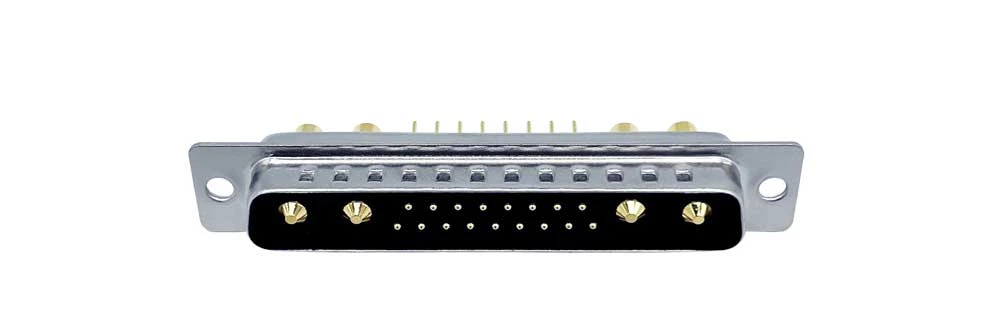
NorComp POWER-D mixed-contact connectors were already performing successfully in the robot’s power-source area.
The mixed-contact D-Sub configuration allowed power and signal contacts to be combined within one connector. This made POWER-D a practical choice for an area where electrical capability and a robust interface were the primary requirements.
Because POWER-D was already working in the robot, it became the natural starting point when the manufacturer began evaluating connections for the four limb assemblies.
Electrically, the connector could support the application. Mechanically, however, the available space changed the decision.
When the Proven Connector Is Too Large
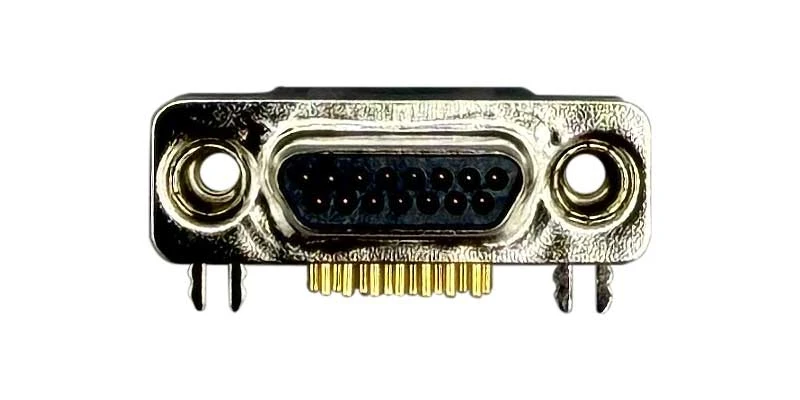
The robot’s limb actuators were tightly packaged assemblies. Actuators, cabling, and structural components were already competing for limited room, while connector size and weight would be repeated across multiple connection points.
The POWER-D footprint required more space than the limb design could comfortably provide.
Instead of redesigning the assembly around a connector that did not fit, the manufacturer’s engineers worked with NorComp engineering to reconsider the application requirements. The new solution still needed to provide dependable performance within a moving electromechanical assembly, but in a considerably smaller package.
That evaluation led to NorComp’s machined MICRO-D platform.
At approximately one-third the size of a standard D-Sub, the 580-M Series and 581-M Series provided a better fit for the restricted space inside the limb actuator assemblies. Their compact metal-shell construction also helped balance the manufacturer’s space, weight, durability, and cost requirements.
POWER-D remained in the power-source area, while MICRO-D moved into ongoing use within the robot’s limbs. Each product was used where its strengths best matched the application.
A New Challenge During Assembly
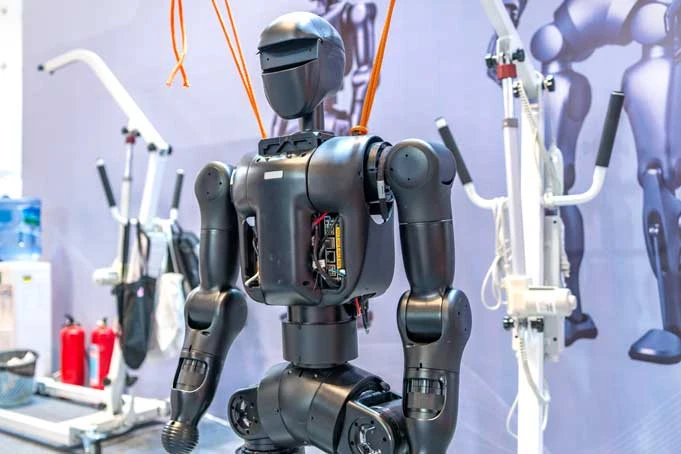
Selecting MICRO-D solved the packaging problem, but integrating the connector into the assembly revealed another challenge.
The manufacturer was blind mating the cable harness to the robot. In a blind-mating application, the connector halves are joined without direct visibility, so the surrounding interface must help guide the contacts into proper alignment.
The existing assembly geometry allowed enough side-to-side movement for the connectors to begin mating slightly off-center. When that occurred, the female tulip contacts could bend.
The connector itself was performing as designed. The challenge came from the way it needed to be used within the robot.
Moving to another connector would have reopened the space, weight, cost, and validation decisions that had led the manufacturer to MICRO-D. Instead, NorComp’s engineers worked directly with the manufacturer’s engineering team and NorComp manufacturing to determine how the existing platform could be made more forgiving during mating.
Improving the Mating Interface
The teams reviewed the mating process, the movement permitted by the connector shells, and the changes that could be made without disrupting the rest of the design.
The proposed improvement was to reduce the perimeter of the receptacle’s mating shell. Tightening this interface would limit side-to-side movement as the connector halves came together, helping guide the contacts into better alignment before engagement.
The change required more than revising a drawing. Because the shell geometry was formed by existing mold tooling, NorComp had to evaluate and modify the manufacturing tool itself.
The revised geometry reduced the amount of misalignment permitted during mating and helped decrease the likelihood of bent contacts and the recovery work that followed. It did not eliminate the need for careful assembly, but it made the connector better suited to the way the manufacturer needed to use it.
Most importantly, the manufacturer could continue using a connector that already met the application’s packaging and performance requirements.
Engineering Beyond the Part Number
What began with POWER-D in the robot’s power-source area grew into a broader engineering relationship as the design evolved.
When POWER-D required too much space inside the limbs, the teams identified MICRO-D as a better fit. When blind mating later exposed an alignment concern, NorComp worked with the customer and the factory to improve the mating interface.
The result was more than a connector substitution. It was an interconnect strategy capable of adapting from one part of the robot to another—and an engineering relationship that continued after the initial product selection.
Connector selection in robotics rarely comes down to a single specification. Space, weight, power, signal, movement, and assembly all have to work together.
Read the Full Humanoid Robotics Case Study
See the complete application story, connector selection process, blind-mating challenge, and the manufacturing change that improved the 580-M MICRO-D platform.