


Open a piece of industrial equipment and you may find modern semiconductor technology sitting only a few inches away from one of the industry's longest-standing connector designs: the 9-position D-Sub.
A Connector That Refuses to Disappear
While the electronics used to sense, process, and communicate information have continued to evolve, the D-sub remains a proven way to provide a durable, serviceable connection between the electronics inside a device and the equipment outside of it.
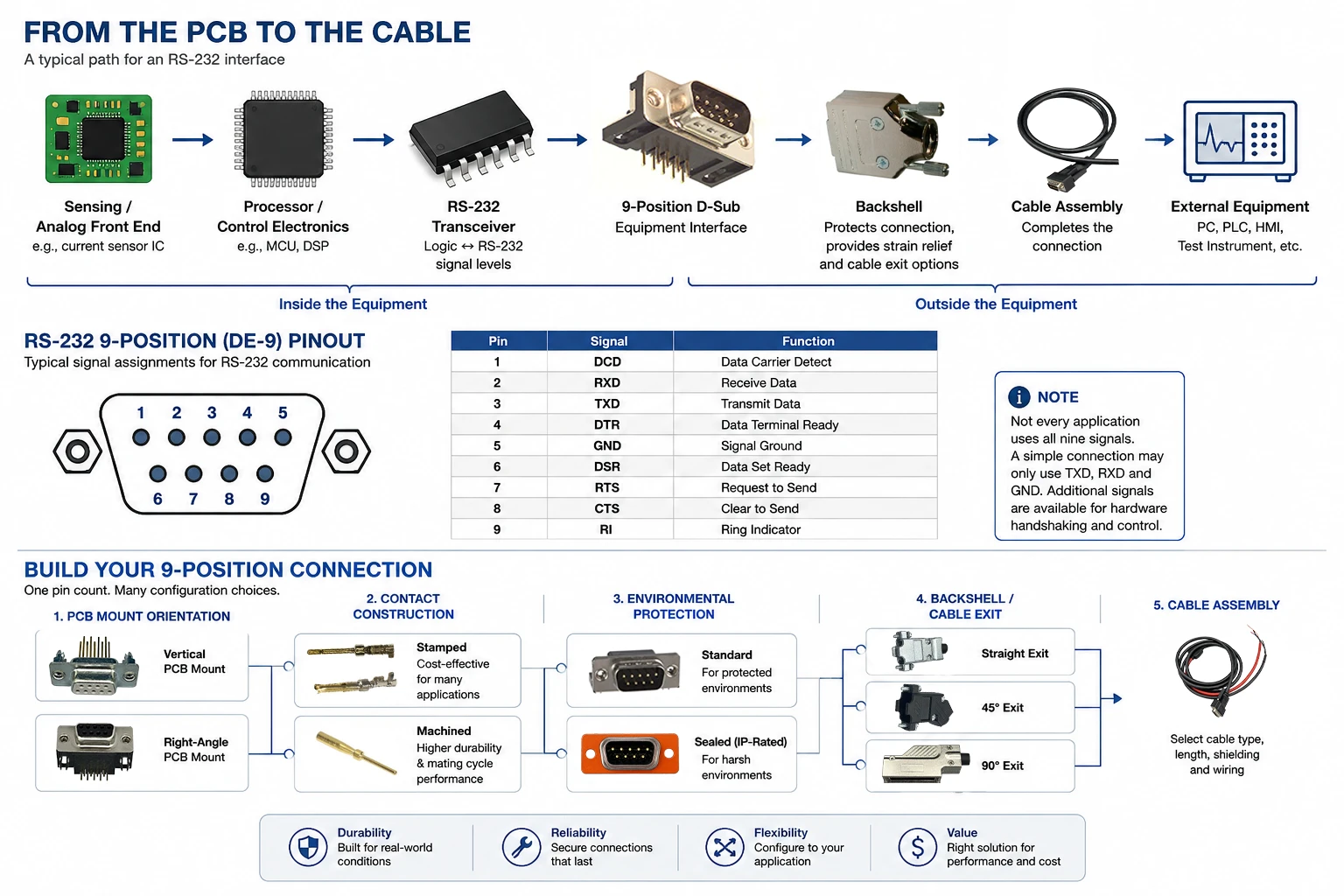
To understand why, it helps to follow a signal from the board to the cable.
It Starts on the PCB
Modern industrial equipment can contain dozens of specialized integrated circuits performing different jobs.
A Hall-effect current sensor IC, for example, can measure electrical current and provide an analog output that the system's control electronics can process.
From Logic to RS-232
The logic-level signals used by microcontrollers are not the same electrical signals used by an RS-232 interface.
Processing & Control → RS-232 Transceiver → D-Sub → Cable → External Equipment
Why a 9-Position D-Sub?
The 9-position D-sub, technically a DE-9 but commonly called a DB9, has become closely associated with RS-232 communication.
| Pin | Signal | Function |
|---|---|---|
| 1 | DCD | Data Carrier Detect |
| 2 | RXD | Receive Data |
| 3 | TXD | Transmit Data |
| 4 | DTR | Data Terminal Ready |
| 5 | GND | Signal Ground |
| 6 | DSR | Data Set Ready |
| 7 | RTS | Request to Send |
| 8 | CTS | Clear to Send |
| 9 | RI | Ring Indicator |
One Pin Count, Many Connector Choices
Two products can both use a DB9 while requiring very different connector configurations.
Right-Angle or Vertical?
- Right-angle PCB connectors work well at panel edges.
- Vertical connectors support different board and enclosure layouts.
Plug or Socket?
Designers must determine which contact gender belongs on each side of the connection.
Stamped or Machined Contacts?
- Stamped contacts offer a cost-effective solution.
- Machined contacts improve durability and mating-cycle performance.
Standard or Environmentally Sealed?
Harsh environments may require sealed connector solutions such as NorComp's SEAL-D family.
The D-Sub Doesn't End at the Connector
Once the connection leaves the enclosure, cable protection and management become critical considerations.
Plastic or Metal?
- Plastic backshells provide economical protection.
- Metal backshells offer greater durability and shielding options.
Straight, 45°, or 90° Cable Exit?
- Straight for open cable-routing space.
- 45° for moderate routing constraints.
- 90° for tight installations and control cabinets.
Strain Relief
Proper strain relief helps prevent cable movement from stressing terminated contacts.
Think Beyond the Nine Pins
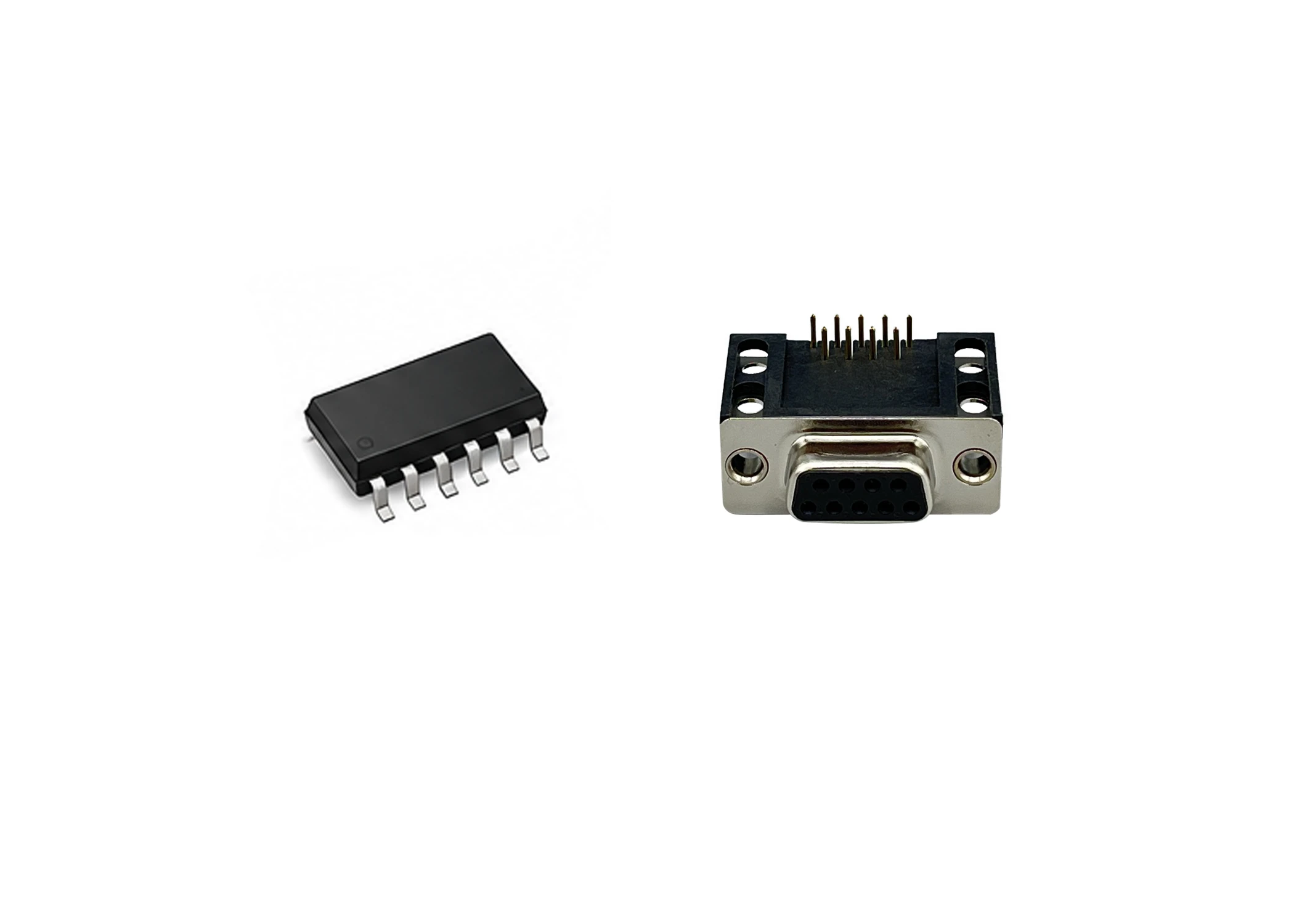
From the outside, an RS-232 port can look remarkably simple. Behind the interface, however, is a series of electrical and mechanical design decisions.
Build the complete connection around the requirements of the application, from the board to the cable.